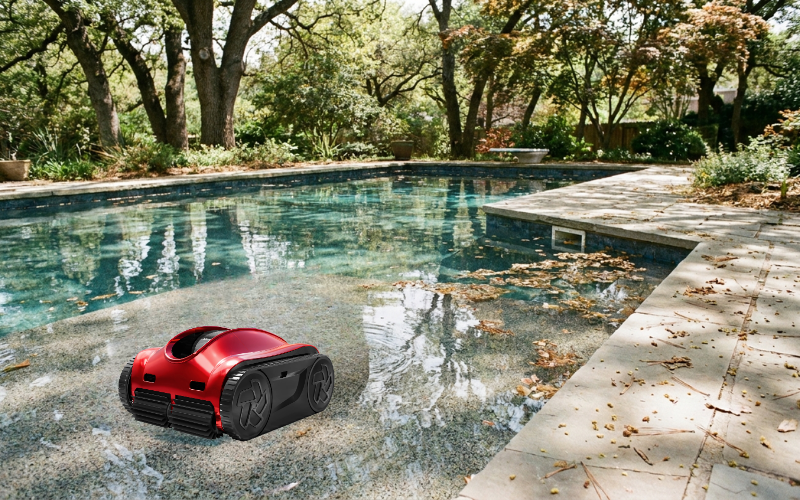
Many pool owners love having trees near the backyard. Trees add shade, privacy, and a more natural look. In summer, they can make the whole space feel cooler and calmer. But trees also change pool care in ways that are easy to underestimate.
A pool near trees does not get dirty in the same way as a pool in a more open yard. The debris pattern is different. The timing is different. The cleaning load is different too. Leaves are the most obvious issue, but they are not the only one. Trees also bring pollen, seeds, blossoms, bark, twigs, and fine organic dust. Some of that debris is large and easy to spot. Some of it is so fine that owners only notice it after the pool starts to look dull.
This is why pool owners with nearby trees should think about robotic cleaning a little differently. The question is not only whether a robotic cleaner can help. It usually can. The more important question is how the cleaning routine should change when the pool sits under or near constant natural debris.
Trees Create a Different Kind of Pool Mess
A pool in an open area may collect dirt from wind, swimmers, and normal outdoor use. A pool near trees deals with all of that plus a steady stream of organic material. That makes the pool feel less predictable.
One day the water may look clean. The next day the surface may be covered with leaves and seed pods. During some weeks, pollen can settle across the floor and waterline even when no major debris is visible from a distance.
Leaves Are Only the Beginning
Most owners think first about leaves. That makes sense because leaves are easy to see and easy to blame. But trees create several other cleaning problems:
- flower petals
- buds and blossoms
- bark pieces
- twigs
- seed clusters
- fine dust from dried plant material
- sticky organic residue
- pollen
These materials behave differently in water. Some float for hours. Some sink quickly. Some break apart and become much harder to remove after only a short time.
Organic Debris Changes Fast in Water
This is another key issue. Tree debris does not stay the same after it lands in the pool. Leaves soften. Blossoms break down. Small debris turns into fine particles. Once that happens, the pool becomes harder to clean than it was in the first few hours after the mess appeared.
That means timing matters more in tree-heavy environments. Cleaning is often easier when it happens sooner and more consistently.
Robotic Cleaning Still Helps but Expectations Should Shift
A robotic pool cleaner can be a strong tool in a yard with nearby trees. But owners should not think of it as a one-time solution to a recurring debris source. Trees keep producing mess. That means the real value of robotic cleaning is not just convenience. It is consistency.
The Goal Is Ongoing Control
With nearby trees, the cleaner is often less about restoring a badly neglected pool and more about preventing small messes from becoming larger ones. That is an important difference.
If leaves and organic material are left in the water too long, they can:
- stain surfaces
- clog baskets and filters faster
- break into fine debris
- add to cloudy water conditions
- create more brushing needs
A robotic cleaner helps best when it is used as part of a regular control strategy.
One Cleaning Cycle May Not Tell the Full Story
Some owners test a cleaner once after a heavy debris day and judge everything from that result. That can be misleading. A tree-heavy pool often needs repeated cycles over time, not a single dramatic cleanup. In these settings, steady use matters more than one perfect pass.
Cleaning Frequency Becomes More Important Near Trees
Many pool care discussions focus on cleaner features. Those points matter, but frequency matters just as much when trees are involved.
A Weekly Routine May Not Be Enough
In a low-debris yard, once or twice a week may keep the pool in good shape. Near trees, that may not be enough during active seasons. Spring, early summer, and fall can all bring heavy natural shedding depending on the type of trees nearby.
Owners may need to think in terms of lighter but more frequent cleaning rather than waiting for a visible mess to build up.
Small Debris Loads Are Easier to Manage
This is one of the biggest lessons for tree-adjacent pools. A robotic cleaner usually works more efficiently when it handles smaller, fresher debris loads. Waiting too long often makes the work harder. Wet leaf piles, broken blossoms, and fine organic residue are more frustrating than fresh debris that has just landed.
That is why some owners find that a lighter but more regular robotic cleaning routine saves more effort than occasional deep cleanup.
Not All Tree Debris Should Go Straight to the Cleaner
Robotic cleaning helps, but it should not always be the first response after a heavy debris event.
Large Debris Should Often Be Removed First
If the pool is full of large leaves, sticks, or seed clusters after wind or storms, manual removal is often the smarter first step. A robotic cleaner is usually more effective after the oversized material is gone.
This protects the cleaner from overload and keeps the filter from filling too quickly.
Fine Residue Is Where Robotic Cleaning Fits Best
After the large debris is removed, the robotic cleaner becomes much more useful. It can then focus on:
- smaller leaf fragments
- pollen
- dirt settled on the floor
- fine organic particles
- light wall residue
That is often where a unit such as the iGarden automatic robotic pool cleaner fits most naturally in a tree-heavy backyard. Its role is strongest when the pool has moved past the roughest mess and needs consistent cleanup to stay under control.
Trees Also Affect Water Quality Over Time
The effect of nearby trees is not limited to visible debris. Organic material can also influence the condition of the water itself.
More Debris Can Mean More Water Stress
When leaves and plant matter sit in the water, they begin to break down. That can increase the burden on the pool system and make it harder to maintain a clean look. Even if the robotic cleaner removes much of the visible debris, owners still need to think about the bigger picture.
More organic load can mean:
- faster basket and filter buildup
- more frequent skimming needs
- greater pressure on water clarity
- more maintenance after storms or windy days
Shade Can Also Change Surface Behavior
Trees often create more shade around the pool. Shade can be welcome in summer, but it can also change how some areas of the pool behave. Debris may collect differently in cooler or less active sections of the water. Some shaded spots may also need more attention over time, especially if circulation is less active there.
Pool Owners Near Trees Need a Different Cleaning Mindset
The biggest change is not technical. It is mental. Owners with nearby trees often do better when they stop expecting the pool to stay clean for long stretches with very little intervention.
Think in Terms of Prevention
A robotic cleaner is often most valuable near trees when it helps prevent buildup, not just remove it after the fact. This means using it to stay ahead of the debris pattern rather than reacting only when the pool looks messy.
Build a Routine Around the Yard You Actually Have
Every backyard is different. Some pools sit near one large tree. Others are surrounded by several kinds of trees with different shedding habits. The best cleaning routine matches that reality.
Owners should pay attention to:
- when debris falls most heavily
- which parts of the pool collect material first
- whether pollen season changes water appearance
- how fast leaves break down after rain or heat
That information helps create a more realistic and effective cleaning routine.
Final Thoughts
Nearby trees change more than the look of a backyard. They change how a pool gets dirty, how quickly debris builds up, and how owners should approach robotic cleaning. Leaves are only one part of the story. Pollen, bark, blossoms, and fine organic debris all add to the cleaning load.
A robotic cleaner can still be very useful in this kind of setting. In many cases, it becomes even more valuable. But the real benefit comes from using it with the right expectations. Pools near trees usually need more frequent attention, faster response after debris events, and a stronger focus on prevention.
When owners understand that, robotic cleaning starts to make more sense. It becomes less about one perfect cleanup and more about maintaining control in a yard that keeps sending new debris into the water. That is the mindset that usually leads to better results over time.